April 18, 2026
Building a Site That’s Actually Hers: Samantha Burch
Minneapolis wedding photographer Samantha Burch needed a site to match her next chapter. Here’s how we built it and why it’s already working!
For all of my website projects I like to ask a client what made them finally pull the trigger on a new site. The answers are usually some version of “I needed something better.”
Samantha’s answer was different.
“I was tired of looking like everybody else’s website. I was ready to increase my prices and stand out a little bit as I take the jump to go from corporate full-time to wedding photography full-time.”
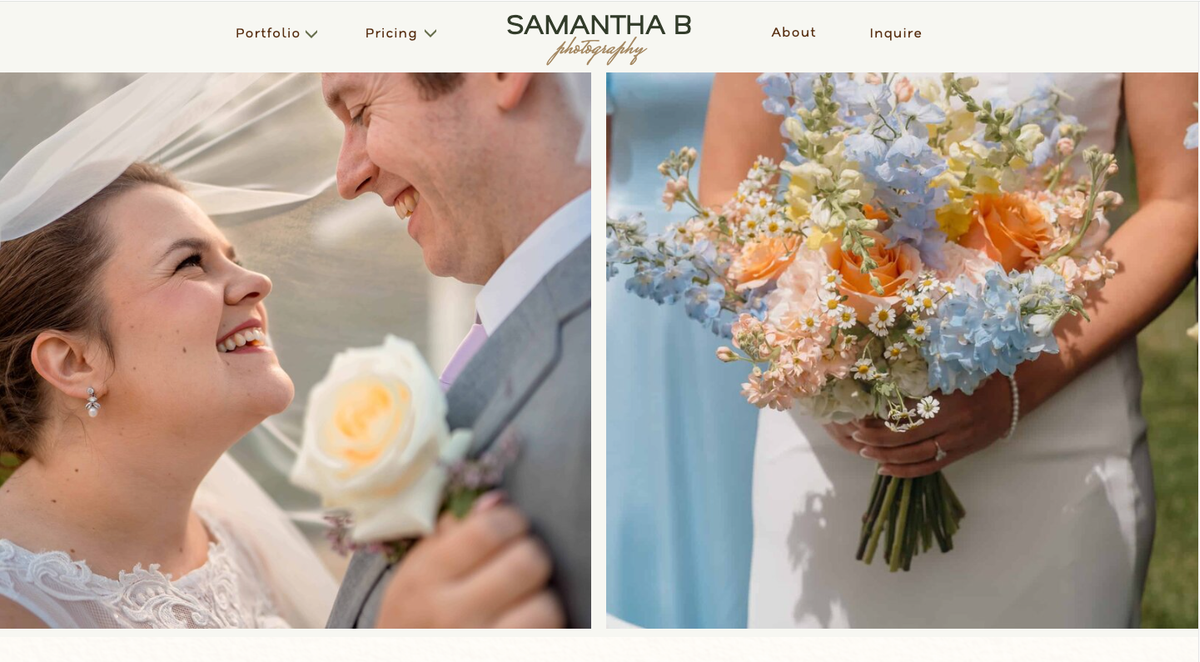
That’s not “I needed something better.” That’s a business decision. And it changes everything about the site building approach. But before we go any further, here’s a link to check out Samantha’s Wedding Photography Website.
A little back story about Samantha
Samantha Burch is a wedding and family photographer based in Minneapolis, MN. She’s currently splitting her time between a corporate leadership role and her photography business, but she’s not doing that forever. The goal is to go full-time in wedding photography, and she’s building everything now to make that transition as smooth as possible.
She knows where she wants to go, and she needed a site that reflected her growing business.
The Problem with Pixieset
Before working together, Samantha was on Pixieset. And for a lot of photographers, Pixieset is fine. But fine wasn’t cutting it anymore.
“I felt very limited with Pixieset. I couldn’t move things the way I wanted to. You didn’t have the fly-ins and some of the magic that really came to life. The fonts, the customization, I still didn’t feel like it was as customizable.”
That word, magic, stuck with me. That’s the gap between a template and a real brand. Templates get you up and running fast. But at some point, you outgrow them. You start noticing all the things you can’t do. All the ways your site looks like the one right next to yours in Google results.
What We Built
We moved Samantha onto ShowIt and began building her a custom site from scratch.
Before a single element went live, we worked through a wireframing and review process together. I sent over pages for iterations and adjustments so she could weigh in on the layout, the feel, the flow, making sure everything matched what she had in her head before we built it out. That back-and-forth is how you end up with something that actually feels like you instead of something you have to grow into.
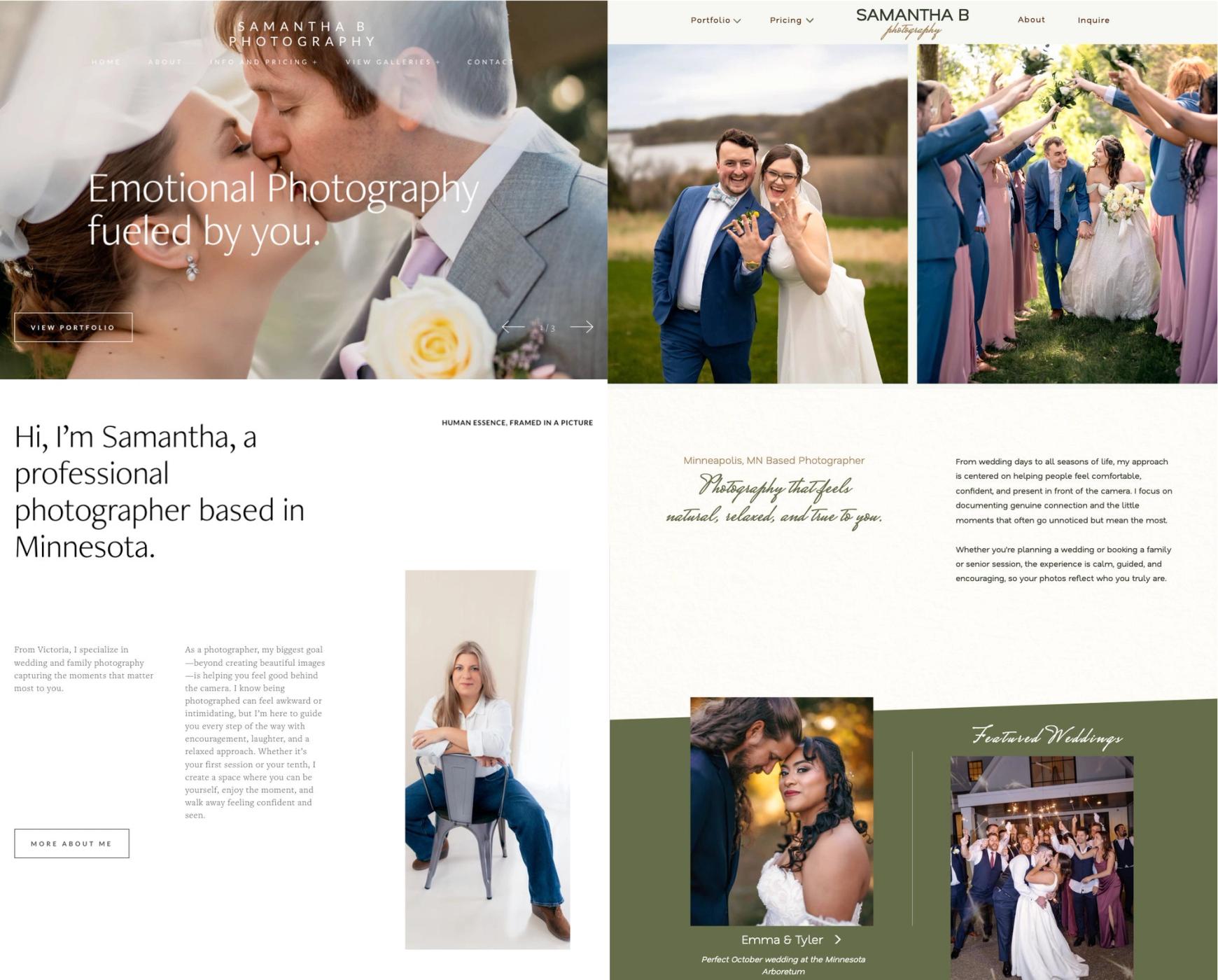
The design direction came straight from her: cohesive with the colors in her images, a defined brand palette she could carry across every document going forward, and a more upscale feel than anything she’d had before. Fixed image scrolling effects. Shapes layered behind photos. Sections that slide over each other as you scroll. The details that don’t show up in a template.
We also handled the technical side. Schema markup, image optimization, alt text on every photo, SEO settings on every page, and a Google Search Console setup so she can actually see what Google thinks of her site as it grows. I ran a complete crawl of her site for SEO optimizations and structured it to climb the ranks and bring in leads on it’s own.
One small but meaningful change we made during the final site review session: adding a pricing button to the mobile view of her weddings page. Samantha put it well:
“With the current climate, if people don’t see some version of open and honest pricing, I’ve done a few little studies — people just disconnect and go to the next one.”
That’s a one-minute change with a real business impact. That’s what building a site with intention looks like. And that’s why I value working very closely with clients to make sure every angle and detail is covered.
The Moment She Knew It Was Right
I always ask clients whether the new site actually gets them where they need to be. Here’s what Samantha said:
“I am so excited because of the individualization. I don’t feel like it looks like every other template anymore, which is, I think, one of the biggest things that I didn’t even know that I needed until I saw what came to life.”
That last part is the one I keep coming back to: I didn’t even know I needed it until I saw what came to life.
That’s the difference between choosing a template and building something. Templates show you your options. A real build shows you what’s possible.
Early Signs from Google
The site is new, and SEO takes time. I’m very upfront about that with every client. But Google Search Console is already picking up the site, and impressions are coming in as Google gets familiar with the new build.
Here’s the way I explained it to Samantha when she asked about the difference between impressions and clicks: impressions come first. Every time your site shows up in results, even if nobody clicks, that’s Google starting to recognize you. The closer you get to page one, the more impressions you get. And once you’re on page one, the clicks follow.
We’re in the impressions phase right now. The clicks are coming over the next few weeks/months.
What This Looked Like in Practice
One thing I try to do with every client is make sure they can actually use their own site after we’re done. Not just view it. Actually go in, swap photos, tweak things, understand what they’re looking at without feeling like they’re about to break something.
So we spent a chunk of our wrap-up session walking through Showit together. By the end, Samantha described making changes on the site as: “That was super easy.” And when we created a hidden page she could use to share location details with family session clients, she immediately recognized it as a safe place to practice edits on her own.
That’s the goal. You should feel like it’s your site, because it is.
The Bigger Picture
Samantha’s situation isn’t unique. A lot of photographers are exactly where she was. They are on a platform that got them started but isn’t built to take them where they want to go. They’re raising their prices, or thinking about it. They’re trying to attract a different client. They need a site that tells that story without them having to explain it.
If you’re looking to raise prices, land more clients, and better educate your clients for smoother workflows, your site can handle the bulk of the work and should be a great reflection of you as a professional.
That’s what Samantha understood. And that’s exactly why we built what we did.
Interested in working together on your photography website? Get in touch here.