April 21, 2026
SEO + Web Design for an Atlanta Family & Dance Photographer: Diana Alford Case Study
Diana wanted her site to bring in clients through SEO. Here's the approach we took and how she felt about the entire process, step by step with real actions.
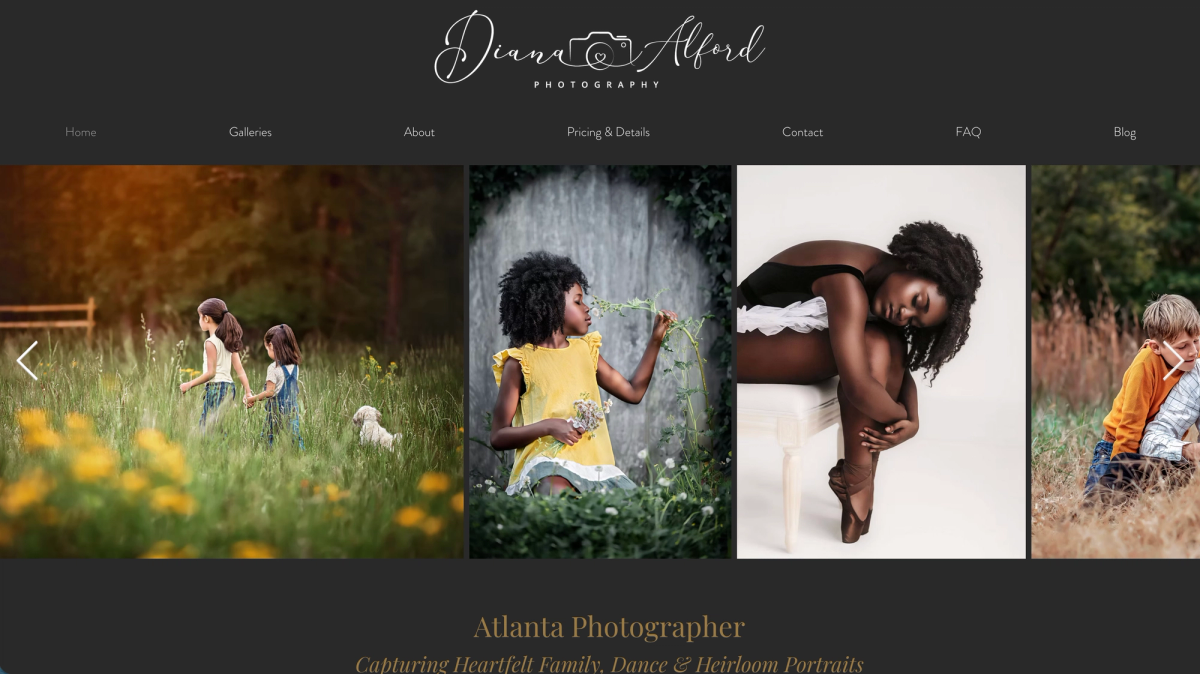
Taking a photographer's site from beautiful but invisible to strategically positioned for growth through competitive analysis, content restructuring, and on-page SEO. Here's how the whole process went down.
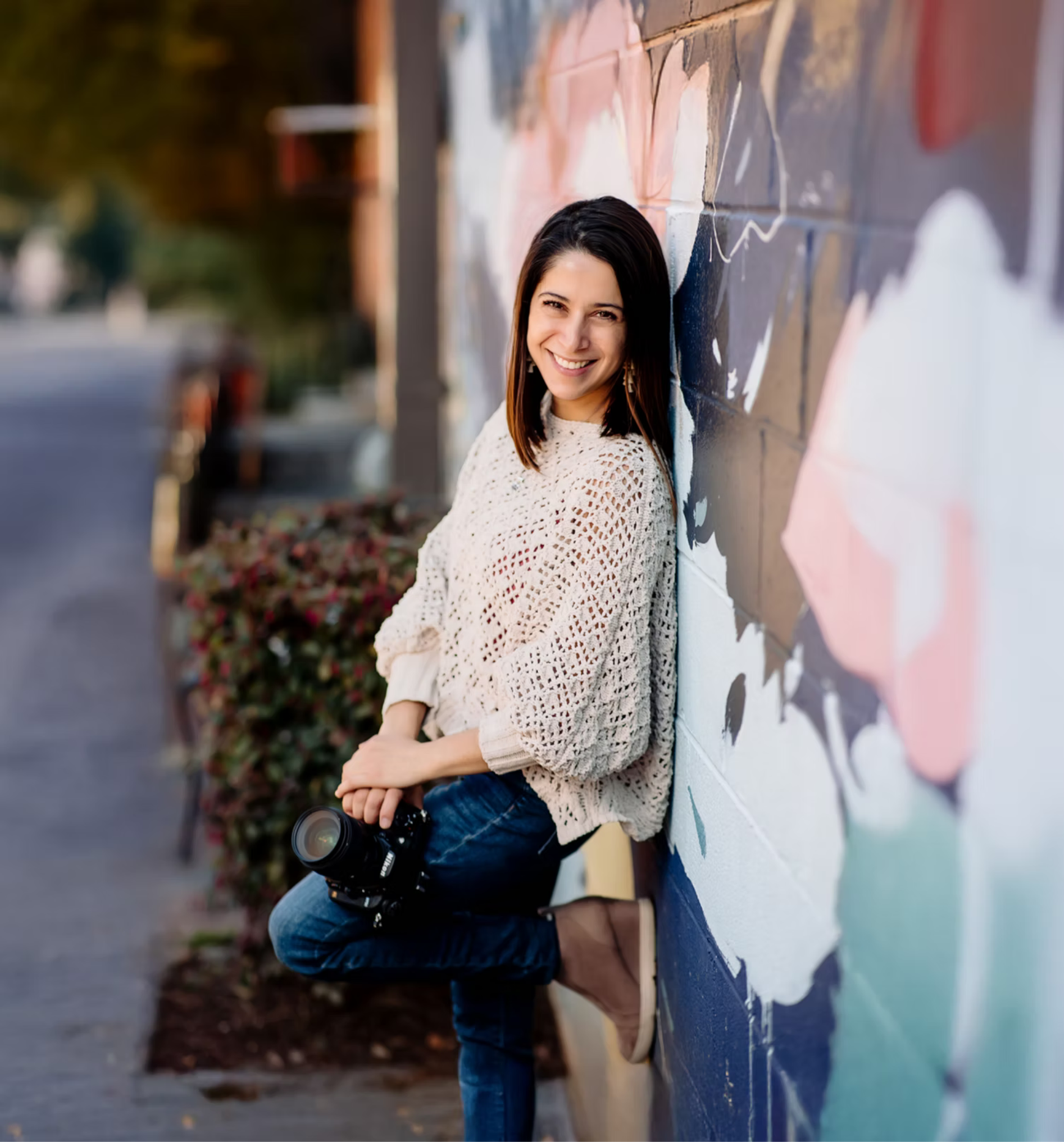
Diana Alford is a family and dance photographer based in the Atlanta metro area, specifically Marietta, GA. She found me through one of my YouTube videos on SEO for photographers, watched it, went to my site, and reached out to see if I offered one-on-one SEO work. I had no idea that's how she found me until this case study call, which honestly made my day and reminded me that I need to make more videos!
Her work is genuinely impressive, you can see her atlanta family and dance galleries here. She shoots families, dancers, newborns, fine art children's portraits, and baby milestones, and the quality of her images is among the best I've seen from the photographers I've worked with. But as we all know in this industry, incredible photos don't automatically translate to getting found online.
The Problem
Diana's story is one I hear a lot. She had been running her photography business for about seven years, and for most of that time, she was focused entirely on her craft. Her photography, her editing, her style. The business side? Not so much.
Here's where it gets interesting though. Years ago, before she even knew what SEO was, she was somehow getting found on Google. Clients would tell her they found her through a search. Her website at the time? In her own words: "a mess. An absolute mess." No text. No tags. Just images. And yet people were hiring her.
What likely happened, and I explained this to her during our call, was that her Google My Business profile was doing the heavy lifting. Back then, her competitors probably weren't as strong on GMB, so she was getting visibility through the local pack even though her website wasn't optimized at all.
Fast forward to about a year before she reached out to me: she did a massive overhaul of her site. She took a class, got some guidance from a mentor on basic SEO, added text to her pages, created niche pages for each specialty, and implemented keywords for the first time. The site looked way better. But her visibility actually went down.
This drove her crazy, and I get it. She put in all this work to improve things and it felt like it made things worse.
My best guess? A combination of a Google algorithm update, increasing competition in the Atlanta market, and possibly some shifts in how her Google My Business was performing relative to competitors. It's one of the most frustrating parts of SEO. There are a million variables and you can make all the right moves but still see a dip because of external factors outside your control.
What I Found in the Audit
When I dug into the competitive analysis, a few things jumped out immediately.
I compared Diana's site against the top two Google My Business results and the top two organic results for "Atlanta family photographer." The data told a clear story:
Diana's site had a Domain Authority of 2. Her competitors averaged 13. The top GMB result has a DA of 22, and that's the single biggest reason she holds the #1 spot. Her site honestly isn't that great. It's slow, the design is rough, and there are overstuffed keywords everywhere. But she has over 2,100 backlinks and a DA that crushes everyone else in the market.
Diana had 10 indexed pages. The competitor average was 58. The #1 organic result has over 100 blog posts going back 15+ years. That kind of consistency and volume is hard to compete with when you're starting from 2 blog posts.
The backlink gap was significant too. Diana had 88 linking root domains and 198 total backlinks. The competitor average was 175 linking domains and over 1,000 total backlinks.
But here's what was encouraging: Diana's on-page fundamentals were actually solid. Her title tags had the right keywords. Her meta descriptions were well written. Her H1 was properly set. Her page speed was the second-best in the group at 60, better than the #1 GMB result at 39. And her imagery and overall site feel were the strongest in the competitive set.
The foundation was good. She just needed more content, more backlinks, and some strategic restructuring.
One thing Diana said during our call that really stuck with me:
"I know you don't have to be the best photographer to get more rankings, but it was pretty obvious... there were a couple that weren't that great and yet they're ranking and they're getting lots of clients. That's very telling."
That's the reality of this industry. You can have a gorgeous site with beautiful work and get zero traffic, or a mediocre site with strong SEO fundamentals and be fully booked. The goal for Diana is to be both: a great looking site that gets all the traffic.
The Work
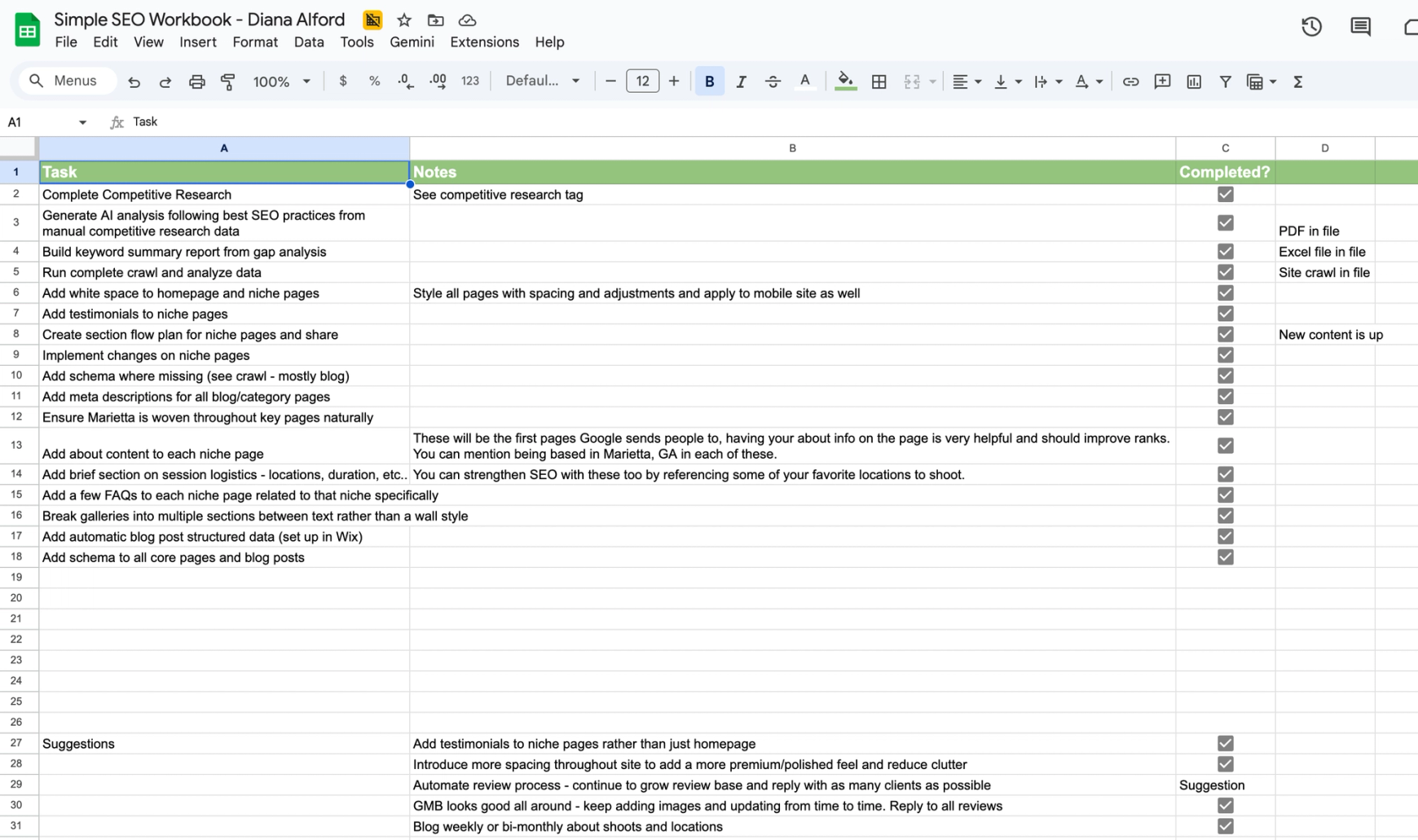
Here's what I did for Diana's site:
Competitive Analysis & Keyword Strategy
I ran a full keyword gap analysis through SEMRush comparing Diana's site against all four competitors. The export had over 400 keywords. I went through every single one and curated it down to about 140 that actually made sense for her business, filtering out maternity-only terms (not her main focus), brand searches for competitors, irrelevant locations, and generic national terms too broad to compete on.
I organized these into three tiers: Tier 1 for keywords she should target with dedicated pages immediately, Tier 2 for broader terms she'll rank for as her authority builds, and Tier 3 for blog content opportunities. Each keyword was mapped to a specific page on her site with notes on which competitors rank for it and why it matters.
For the dance photography niche specifically, I pulled keyword data from two additional competitors since they weren't in the original competitive set but are Diana's primary competition for dance terms. The dance keyword cluster turned out to be a huge opportunity with most keywords having very low difficulty scores.
Content Restructuring & On-Page Updates
Diana already had dedicated niche pages for each of her specialties: families, dance, newborn, baby milestones, and fine art children's photography. That was a big advantage. The issue was that most of these pages were primarily image galleries with minimal written content.
Her dance page, for example, had roughly 150 words of body copy. Beautiful images, but Google needs text to understand what a page is about and rank it accordingly. We expanded the content on each niche page significantly, adding session details, location information, FAQs specific to each niche, and testimonials relevant to that specialty.
The idea was that each niche page should function as a standalone landing page. Before the updates, Diana assumed everyone would enter through her homepage and navigate from there. Once I explained that Google sends people directly to the page that matches their search, a family searching for "Atlanta dance photographer" might land directly on her dance page, not her homepage, it clicked for her.
"Before, I would expect people to land on always like on my homepage. I didn't understand that they wouldn't. Now after you've explained it, how people actually land on my dance page or my family page, and instead of having to go back to my homepage for more information... everything's there."
Design Tweaks
While the project was primarily SEO-focused, I also made some small design adjustments to the site. Things like adding more whitespace between sections and introducing subtle design elements like vertical accent lines on the niche pages. Small changes, but they tightened up the overall feel significantly.
Diana noticed immediately:
"It looks cleaner and I like it. It's something so simple and I'm like, why didn't I think of that? Small changes but big difference."
Backlink Strategy
This was the biggest "aha moment" for Diana. Her previous mentor had covered keywords and on-page SEO but never mentioned backlinks. When I showed her the competitive analysis and how the #1 GMB result ranks primarily because of a DA of 22 built on 2,100+ backlinks, it reframed the whole picture.
I set her up with a backlink building strategy focused on local opportunities: dance studios, local business directories, vendor partners, and a guest article on LumaQuest (a photography lighting brand whose site I manage). That article plus the case study you're reading right now will give her two quality backlinks to start building her domain authority.
Where Things Stand
I want to be upfront here: there are no dramatic results to share yet, I’m writing this about 2 weeks after implementation and SEO takes time, especially when you're building domain authority from a DA of 2 (ground floor for ranking).
Diana said it best when I asked what she'd tell a photographer friend about investing in SEO:
"I'm going to say, until I see results, I'm not absolutely sure. But I felt like I was completely lost and I needed to get to a solid place. And more than anything I feel so much more comfortable because I have a plan, I can ask questions... I'm in a much better place compared to where I was."
And then:
"Once I start seeing results, I'm going to say absolutely it's worth investing."
That honesty is why I wanted to include it. SEO isn't magic. It's not instant. And anyone who tells you otherwise is selling something. But what it does is build a foundation that compounds over time. Diana now has optimized niche pages, a keyword strategy mapped to her actual business, a content calendar (she bought a chalk calendar and put it on her wall, I love that), and a clear understanding of what moves the needle.
The pieces are all in place. Now it's about consistency and patience.
What Diana Is Doing Now
She's executing on the plan with a daily schedule: Mondays for blog posts, Tuesdays for backlink outreach, and dedicated time throughout the week for the other SEO tasks. She's also experimenting with Pinterest to drive initial traffic to her dance content, which is already generating some clicks.
"I feel like I just took it apart, took the whole thing apart, which was so overwhelming, and now it's like little pieces of things that are easy to do once you separate them."
That right there is the goal. Take something that feels impossibly complex and break it into manageable pieces. Diana's doing the work, and I'm confident the results will follow.
I'll update this case study once we start seeing movement in the rankings. Stay tuned.
Diana Alford is a family, dance, and fine art photographer based in Marietta, GA serving the greater Atlanta metro area. You can see her work at dianaalfordphotography.com.